
C31 · Ferrous Metallurgy
Stainless Steel Plates for the Steel Rolling and Forging Industry: 310S/304 Selection and 6 Part Lists
In steel rolling and forging industry, we have organized six parts using stainless steel: commonly used 310S / 304 / 904L, with thickness ranging from 3–275 mm.
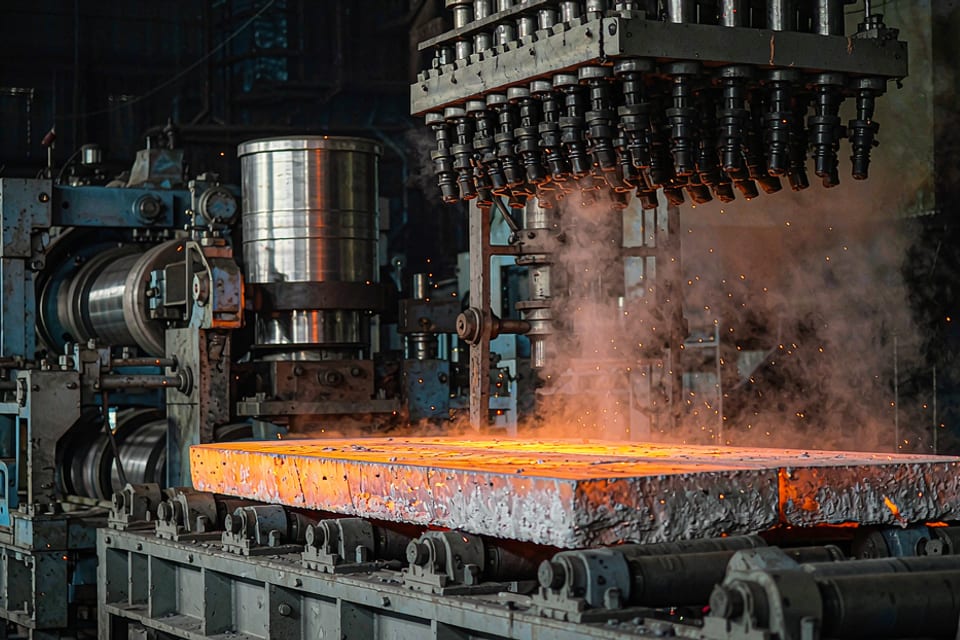
6 parts list and material recommendations
| Part / Component | Recommended grade | Specifications / Thickness | Surface | Main Failure Modes | Reference Standards |
|---|---|---|---|---|---|
| Casting Foot Rollers | 1Cr13 High Ni Stainless Steel Overlay/Ni Base Overlay; Base Material 42CrMo | Roll Diameter φ100–275mm | Overlay/Finished Surface | Thermal Fatigue (Surface and Internal Temperature Difference of About 300°C → Network Thermal Cracks) + Acid Corrosion (Protective Slag + Cooling Water) + Wear; Deformation after 3 Welding Cycles at the Support Frame/Screw Holes | GB/T 984/NB/T 47014 Overlay; JB/T 5000 Casting Body |
| Roll Guides/Blades | Heat Resistant Stainless Steel/Overlay/304 | 20–100mm | Overlay/Finished Surface | High Temperature Oxidation + Slab Scrubbing + Thermal Fatigue | According to Equipment Drawings; GB/T 984 |
| Radiant Tubes in Heat Treatment Furnaces | 310S/314 Heat Resistant Castings | Roll Wall Thickness 8–30mm | Casting/Forging | Creep/Oxidation/Hot-Cycle Cracking | GB/T 8492;GB/T 3280 |
| Pickling Tanks (Sodium Chloride/Sulfuric Acid/Acid Mix) | 904L/254SMO/310S | Wall Thickness 3-12mm | Reinforce/ Pickling | Hydrochloric Acid/Sulfuric Acid + Iron Chloride + High Temperature → Uniform Corrosion + Pitting + SCC; 316L quickly fails in hot concentrated Hydrochloric Acid | ASTM A240;NB/T 47002 |
| Regeneration Furnace/Piping | 310S/904L/254SMO | 3–20mm | Reinforce/ Pickling | High temperature 600–800℃+HCl/HF+FeCl₂ | ASTM A240;GB/T 3280 |
| Molten metal hoists, Molten metal grippers, Molten metal scrap buckets | 304/316LHeat-resistant castings | 10–50mm | 2B/Forcasting | High load+thermal fatigue+oxidation | GB/T 3280;GB/T 8492 |
Table isStandard configuration.The same part may switch from 304 to 316L or 2205 based on different media, temperatures, and welding methods—explain the usage conditions instead of specifying grades.
Material Selection Tips
- Common Alloy Grades: 310S (3), 304 (2), 904L (2)
- Hot Zone Fatigue and Oxidation Requires 310S / Heat Resistant Castings (6/6 Hits)
- Corrosion Caused by Chlorides and Salts (2/6 Hits)
- Thickness Range: 3–275 mm
Black Metal Smelting and Rolling Industry's Most Used Stainless Steel?
Total Pages Statistics Show 310S (3), 304 (2), 904L (2) Appear Most Frequently
Specific Part Selection Depends on Media and Temperature, e.g., Stainless Countertop Contacting Salt Water Requires 316L
What parts are most prone to failure?
By failure description, typical is "continuous casting foot rolls": thermal fatigue (surface-to-core temperature difference around 300°C → networked thermal cracks) + acidic corrosion (protective slag + cooling water) + wear; weld joints and pin holes deform after three times of pouring; recommended grade 1Cr13 high Ni stainless steel overlay/Ni-based overlay; base material 42CrMo, specifications roll diameter φ100–275mm.
What thickness should I choose?
Thickness range in the list is 3–275 mm. Thin plates consider forming and surface quality, thick plates consider welding and structural strength; different manufacturers may have different values for the same part based on your drawings or conditions. Recheck according to your requirements.
Related Materials and Adjacent Industries
Applications6