
S5 · Wet FGD Desulfurization
Wet FGD Desulfurization (List of Media, Grades, and Boundary Conditions for 2507/904L Mediums)
Sort the media, grades, and boundary conditions related to wet FGD desulfurization: List three typical components/processes with recommended grades, specifications, failure reasons, and standards.
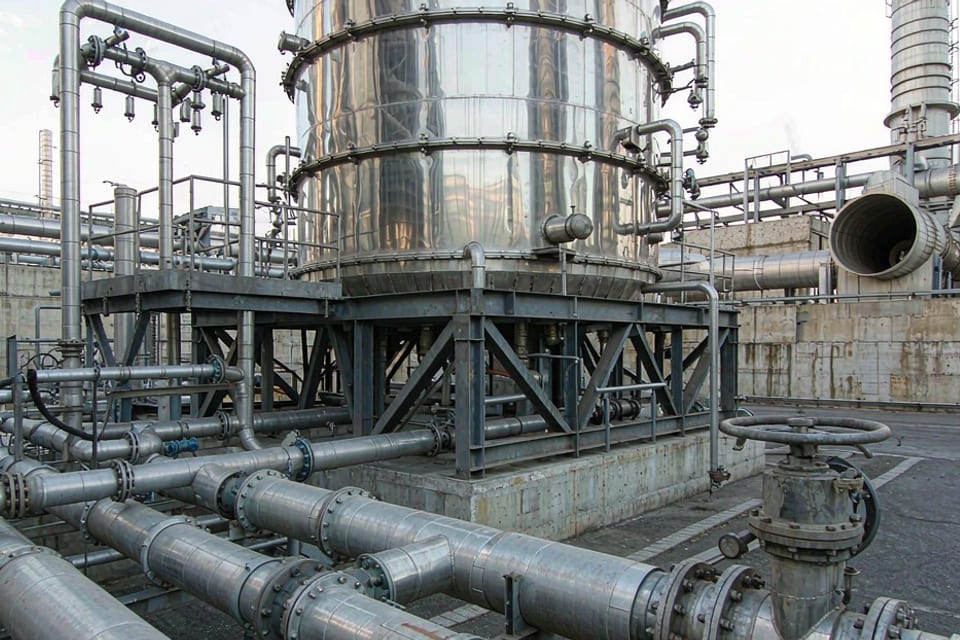
Three parts and material lists
| Part / Component | Recommended Grade | Specifications / Thickness | Surface | Main Failure Modes | Reference Standards |
|---|---|---|---|---|---|
| FGD Outlet Flue Gas Condensate | 2507/2205/316L/304L | Water Saturation + Solid-Liquid Droplets + Cl⁻/SO₄²⁻ | Corrosion Rate Ranking: 2507 < 2205 < TA2 < 316L; 2205/2507 insignificantly different; 304L/316L significant corrosion | Spray Tower / Mist Chamber / Flue Liner prefer 2205/2507; select 254NM/AL-6XN in extreme local areas | ASTM A240;DL/T 5196 |
| Sulfuric Acid Environment (not FGD but often confused) | 2507/904L/254SMO | H₂SO₄ 20–40% | Corrosion rate of 2507 at 40% H₂SO₄ > 50 mm/a; 904L/254SMO better with 904L/254SMO | When sulfuric acid concentration or temperature exceeds the 2507 boundary, upgrade to 904L/254SMO and do not use duplex steel as a workaround | ASTM A240; Corrosion Maps |
| FGD Absorber / Dry-Wet Alternation Entry Flue | 254NM/AL-6XN/904L/C276/C22 | High Cl⁻ concentration + pH 2–5 + 50–160°C | 316L perforates quickly at the wet-dry boundary; localized pitting and SCC in high alloy areas | High alloys used only for most severe local conditions, not throughout the entire tower uniformly | ASTM A240/B575;DL/T 5196 |
Table isStandard ConfigurationMaterial selection
Consider usage conditions rather than specifying grades
- The most common grades in this industry are 2507 (2), 904L (2), and 304L (1) — parentheses indicate the number of parts involved, useful for quoting and material ordering.
- Thickness range: 2–160 mm. Thin plates are often formed pieces (considering bend back and deep drawing cracking), thick plates are typically welded structures (considering heat input and sensitization).
What are common questions?
Wet FGD desulfurization: 2205/2507/254NM/904L Which stainless steel is used the most for sorting corrosion rates?
Total pages: Counting these 3 parts, the most frequent is 2507 (2), 904L (2), and 304L (1). Specific to a part still depends on the medium and temperature, such as stainless countertops that contact salt water should switch from 304 to 316L.
Which parts are most prone to problems?
Failure description, typically "FGD condensate from flue gas": Spray tower/scrubber/cloth lining priority 2205/2507; extreme local selection 254NM/AL-6XN; recommended grades 2507/2205/316L/304L, specification water-saturated + solid-liquid droplets + Cl⁻/SO₄²⁻. This type of condition recommends specifying medium concentration, temperature, and cleaning method during the design phase.
What thickness should I select?
Thickness range in the list is 2–160 mm. For thin sections, consider bending and surface finish; for thick sections, welding and structural strength. Values may vary by manufacturer for the same location, review your drawing or operating conditions.
Related Materials & Adjacent Industries
2205Material & Specifications304LMaterial & Specifications316LMaterial and SpecificationsStainless Fasteners: A2-70/A4-70/A4-80/D Series and Latest StandardsStainless FastenersDouble phase stainless steel flanges for seawater desalination: 2205/2507 pressure-temperature-corrosion boundaryDuplex Flange & DesalinationSanitary diaphragm valves/green valves: ASME BPE, Ra, and temperature boundariesSanitary Valves