
C22 · Paper & Pulp
Stainless Steel Plates for the Paper and Paper Products Industry: 316L/304 Selection and List of 8 Parts
In the paper and paper products industry, we have organized eight parts that use stainless steel: commonly used 316L / 304 / S30408, with thickness ranging from 1.5–40 mm.
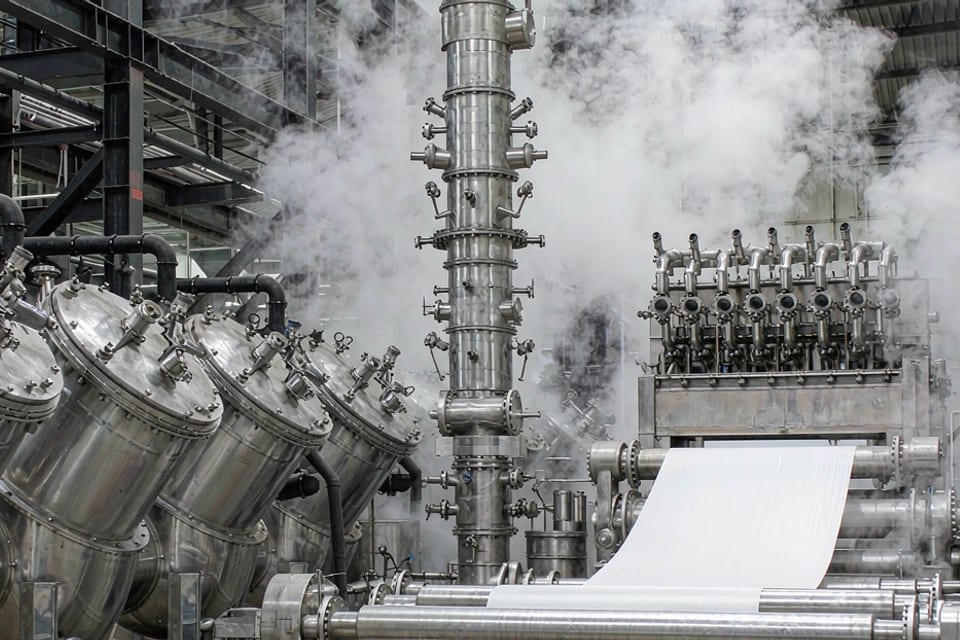
8 Parts and Material List
| Part / Component | Recommended Grade | Specification / Thickness | Surface | Main Failure Modes | Reference Standards |
|---|---|---|---|---|---|
| Pressure Screen Drum Flange Ring | S30408 (Failure Case)/S30403/S31603 (Improvement) | Flange Ring 10–40mm | 2B/acid wash/homogenization | Welding sensitization → Cr₂₃C₆ precipitation → chromium depletion → Cl⁻/S²⁻/K⁺ corrosion + cyclic loading → fatigue fracture | GB/T 3280;JB/T 4708 |
| Screen Drum Wedge Mesh Filter/Filtration Core | 304/316L/904L | Gap 25μm–1.0mm | Electrolytic polishing/acid washing | Slurry wear+Cl⁻ pitting+blockage | GB/T 3280 |
| Steam Cooker Shell/Coating | 316L/317L/Bi-metal composite plate | 6–30mm | 2B/acid wash/composite | High temperature 150–170℃+ alkaline/acidic steaming solution+S²⁻ → SCC and uniform corrosion | NB/T 47002;GB/T 3280 |
| Black Liquor Evaporator/Concentrated Black Liquid Pipeline | 304L/316L | 2–10mm | 2B/ Pickling | High Concentration Black Liquor + High Temperature + Alkali → Alkali Stress Corrosion Cracking | GB/T 3280;GB/T 4334 |
| Droop Box Wet End Pipings / Spraying Pipes | 316L | 1.5–5mm | 2B/ Pickling | White Water Cl⁻ + Fiber Wear + Shutdown Corrosion | GB/T 3280 |
| Press Rolls Surface / Coating | 2205/316L | Surface 10–40mm | Processing Surface / Rubber-Coated | High-line tension + fiber wear + white water corrosion | ASTM A240;GB/T 3280 |
| Cylinder/roll guard/bearing wrap | 304/316L | 2–10mm | Mirror/2B | High temperature 120-160℃ + humidity + paper web friction | GB/T 3280 |
| Oxylignin Spraying Tank | 316L/lean duplex | 6–20mm | 2B/ Acid Wash | High Temperature 90–110℃ + Alkaline + Oxygen → SCC and Oxidation Corrosion | GB/T 3280;ASTM A240 |
Table InsideConfigurations. Parts of the same material may change from 304 to 316L or 2205 depending on the medium, temperature, and welding method —— Explain usage conditions instead of specifying grades.
Material Points
- The most common grades in this industry are 316L (7), 304 (2), S30408 (1) —— The numbers in parentheses indicate the number of parts involved, useful for quoting and material preparation.
- High-temperature sections also suffer from thermal fatigue and oxidation; consider using 310S / heat-resistant castings (4/8 items hit).
- Welded components need to be checked for sensitization and chloride-ion stress corrosion cracking (4/8 items hit).
- Thickness range: 1.5–40 mm —— Thin plates are often formed parts (consider bending rebound and deep drawing cracks), thick plates are welded structures (consider heat input and sensitization).
Common Issues
What stainless steel is used most in the paper and paper products industry?
Total sheets: 316L (7), 304 (2), S30408 (1).
Which part is prone to problems?
Typical failure: "Screen drum flange ring" due to sensitization of welds, Cr₂₃C₆ precipitation, chromium depletion, chloride/sulfate/alkali corrosion, and alternating loads leading to fatigue fracture. Recommended grades S30408 (failure case)/S30403/S31603 (improvement), size 10–40mm flange ring. For this condition, it's recommended to specify medium concentration, temperature, and cleaning method during the design phase.
What thickness should I select?
Thickness range in the list is 1.5–40 mm. For thin sections, consider bending and surface finish; for thick sections, welding and structural strength. Values may vary by equipment manufacturer for the same location. Recheck against your drawing or operating conditions.
Material and Specifications
Applications8
Thickness1.5–40mm