
Power & Energy
Two different battles: high-temperature pressure parts (boiler, turbine) and wet flue-gas corrosion (FGD, ductwork). The second is where 304 is routinely eliminated.
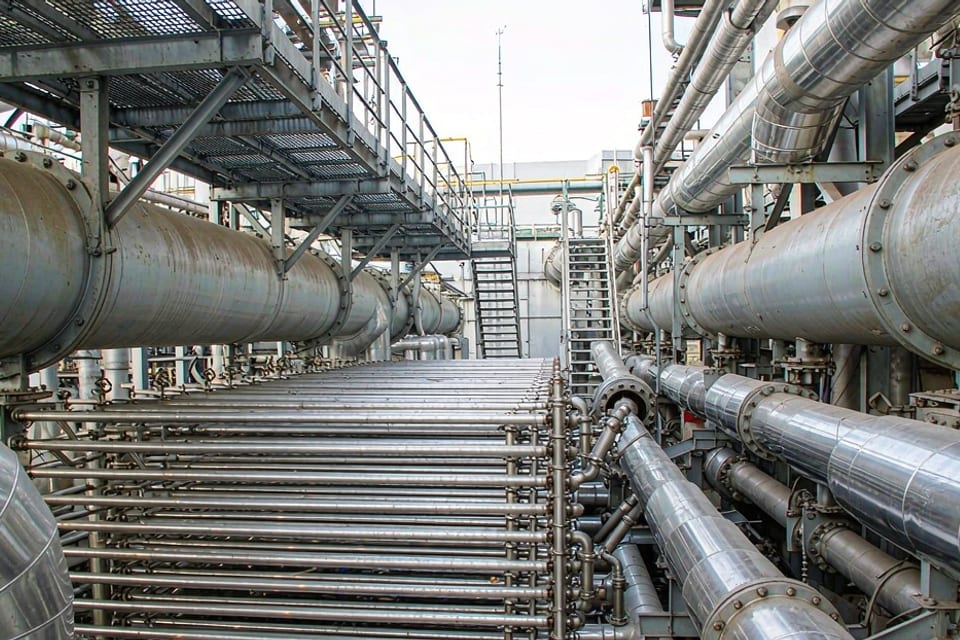
Typical parts and material selection
| Part | Grade | Surface / size | Watch out for |
|---|---|---|---|
| FGD absorber tower | 316L / 2205 | Plate 6–20 mm | Dew-point corrosion, weld quality |
| Duct / expansion joint | 316L / 317L | 2–6 mm | Acidic condensate, fatigue |
| Condenser tube | 304 / 316L / Ti | Tube Φ19–25 | Flow erosion, ammonia attack |
| Support / platform grating | 304 / 316L | Section / grating | Atmospheric corrosion, load |
| Coal & ash handling | 304 / duplex | Wear plate 6–20 mm | Abrasion plus corrosion |
Three real constraints in this industry
Wet flue gas must be sized on dew point
Flue-gas dew points sit at 90–130 °C and the condensate can reach pH 2–3 with chlorides. Under those conditions 304 typically lasts under two years — go straight to 316L or 2205.
High-temperature parts are designed on creep
Boiler and turbine components are sized by creep strength. Check the 100,000-hour rupture strength at the service temperature, not the room-temperature tensile value.
Much of it is welded on site
Towers and ducts are largely site-welded. Include WPS/PQR and post-weld pickling & passivation in the delivery scope, or rust complaints start during installation.
Related products
Need a quote or technical support?
Send us the part, grade, size, quantity and destination port — we reply with FOB / CIF within 24 hours.