
S6 · UHP 316L for Semiconductor
Semiconductor UHP 316L (Media and Boundary List for 316L/304L)
List the media, grades, and boundary conditions related to Semiconductor UHP 316L: 4 Typical Components/Conditions, including recommended grades, specifications, failure reasons, and standards.
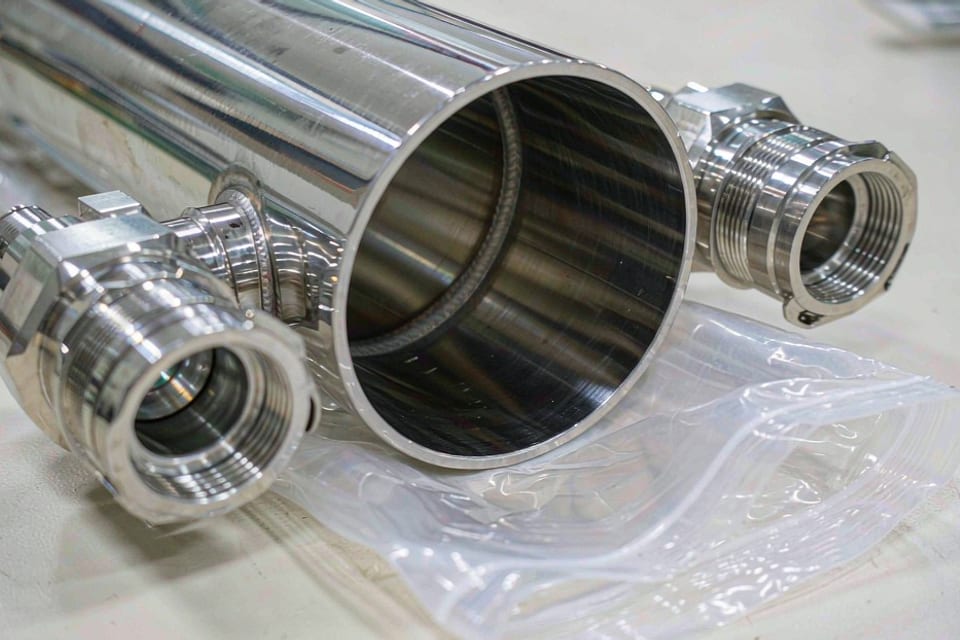
Four Parts and Material List
| Part / Component | Recommended Grade | Specifications / Thickness | Surface | Failure Modes | Reference Standards |
|---|---|---|---|---|---|
| UHP Gas Transfer Pipelines | 316L VIM-VAR | Tensile Strength: 0.010%, Sulfur (S): ≤0.05%, Oxygen (O): ≤0.07%, Impurities: ≤0.5 grade ASTM E45 A/B/C/D, Microstructure: Fine Series | Mechanical Polishing Ra≤0.25μm → Electrolytic Polishing Ra≤0.13μm; High-end Ra≤0.05μm | Particle/Metal Ion Contamination is the main failure mode; Intergranular Corrosion/Hot Zone in Welds secondary but not to be ignored | SEMI F20 Grade 5;SEMI F19;SEMI F57 |
| Special Gases Valve Bodies / Reducing Valves / Diaphragm Valves | 316L VIM-VAR Forgings | S≤0.005% | Electropolishing Ra≤0.2μm | No free iron | SEMI F20 4.6.2;ASTM A182 |
| Seat to Tube Wall Distance >1D | 316L CMP/Wet Electronic Chemical Pipelines | EP/PFA/PTFE Liners | Ra≤0.2μm | Abrasive Wear + Strong Acids/Oxidizers + Particle Retention | SEMI F20;SEMI F57 |
| Vacuum Chambers/Flaps | 304L/316LGrade | Low vent rate is key, not sulfur or oxygen | 2B/ Electro-polish/Acid wash | Inadequate venting → Vacuum drop; leaks during welding | ASTM A240;ISO 3669 |
Table includesStandard configuration. Same part can use 304, 316L, or 2205 depending on media, temperature, and welding method—explain conditions better than specifying grades.
Material considerations
- The most common grades in this industry are 316L (4), 304L (1) —— numbers in parentheses indicate the number of affected areas, useful for quoting and material preparation.
- In acidic media, 316L is just a starting point; concentrations and temperatures increase to consider 904L / Duplex (2/4 hits).
- Thickness range: 0.005–0.01 mm —— thin plates are mostly formed parts (consider bending rebound and deep drawing cracking), thick plates are mostly welded structures (consider heat input and sensitization).
Common Issues
Semiconductor UHP 316L: Which stainless steel is used most for SEMI F20 sulfur/oxygen/inclusions/Ra limits?
Based on total pages, the top grades are 316L (4) and 304L (1). Specific to a part still depends on the medium and temperature; e.g., stainless countertops that contact salt water should switch from 304 to 316L.
Which parts are most prone to issues?
Based on failure descriptions, typical is "UHP gas conveying pipes": particulate/metal ion contamination is primary failure; intergranular corrosion/HAZ welds secondary but not to be ignored; recommended grade 316L VIM-VAR, specs S ≤0.005–0.010%; O≤7ppm; inclusions ASTM E45 A/B/C/D fine series ≤0.5 grade. For this condition, specify medium concentration, temperature, and cleaning method during design phase.
What thickness should I choose?
Thickness range in the list is 0.005–0.01 mm. For thin plates, consider formability and surface quality; for thick plates, welding strength and structural integrity. Values may vary by equipment manufacturer for the same part; review your drawings or conditions.
Related materials and adjacent industries
316LMaterial and specifications304LMaterial and SpecificationsStainless Fasteners: A2-70/A4-70/A4-80/D Series and Latest StandardsStainless FastenersCarbon Steel Flanges for Seawater Desalination: 2205/2507 Pressure-Temperature-Corrosion BoundariesDuplex Flange & DesalinationSanitary Diaphragm Valves/Clean Valves: ASME BPE, Ra, and Temperature BoundariesSanitary Valves