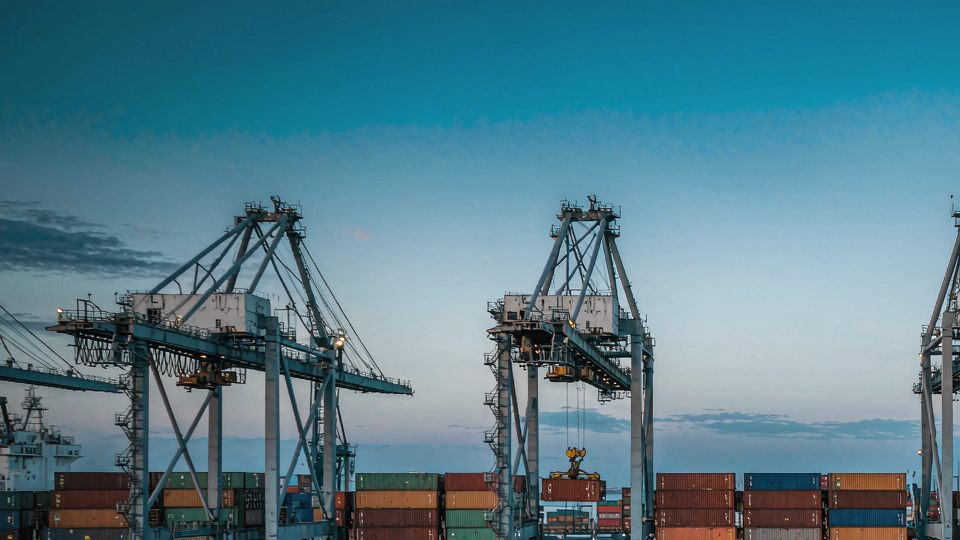
In seaside or coastal projects, the type of problem that arises most easily is "installing 304 but using it with the expectations of 316L." The two materials look the same and differ in price by about thirty percent, with only one elemental difference: 316L contains 2–3% molybdenum (Mo). Molybdenum does not contribute to strength and does not change workability; it does only one thing — resistance to pitting corrosion and crevice corrosion caused by chlorides.
One-Sentence Judgment
For long-term contact with chloride-containing media (seawater, salt spray, brine, sodium hypochlorite, salted sauces) or in applications with elevated temperature and non-low chloride concentration, use 316L or duplex steel; for pure water, indoor, dry atmosphere, and general food contact, 304 is sufficient. In coastal areas, an additional distinction must be made between "indoor" and "open-air exposed to sea breeze": for components exposed to sea breeze in the open, even decorative parts, 304 often develops rust spots within one or two years.
Criterion: Calculate PREN First, Then Look at Temperature
To judge pitting corrosion resistance, the industry commonly uses a pitting resistance equivalent number (PREN):
PREN = %Cr + 3.3 × %Mo + 16 × %N
- 304 / 304L: no molybdenum, PREN about 18–19;
- 316L: contains 2–3% molybdenum, PREN about 24–26;
- 2205 duplex steel: PREN about 34–36; 2507 super duplex is higher, about 40 and above.
For roughly every 10 increase in PREN, the critical pitting temperature (CPT) rises by about one step — so "316L is a bit stronger than 304" is not psychological comfort but a calculable difference. What really determines material selection is the combination of three quantities: chloride concentration, medium temperature, and whether crevices or deposits exist. When the three are superimposed, the risk is not additive but multiplicative: the same 200 ppm chloride may cause no problem for years in circulating water at 25℃, but in a stagnant crevice at 60℃ it can perforate within a few months.
A commonly cited rule of thumb in the industry is that "when chloride exceeds about 200 ppm and the temperature is above 60℃, 304 is no longer suitable." It is only an empirical value, not a mandatory standard clause; in practice, medium analysis reports and actual measurements under similar operating conditions should govern — but it can help you quickly rule out clearly unsuitable options: seawater chloride is about 19000 ppm, two orders of magnitude above this line, so seawater applications should not start with 304.
Two Easily Overlooked Factors
① Crevices are more dangerous than surfaces. Under gaskets, between bolts and plates, at the boundary between weld spatter and base metal, and in pits where material accumulates without cleaning — all are dead corners where chlorides concentrate. For the same material, components with crevices often perforate from within the crevice first.
② Sensitization of the weld heat-affected zone. When 304 stays in the 450–850℃ range (welding, hot working), chromium carbides precipitate and chromium depletion occurs at grain boundaries, leading to intergranular corrosion in chloride or nitric acid environments. Therefore, for welded parts, low-carbon 304L / 316L should be preferred over ordinary 304.
Surface Rust Spots Do Not Necessarily Mean the Wrong Material Was Selected
A considerable portion of the "304 rusting" commonly seen on coastal projects is not pitting but iron contamination: carbon steel tooling, ordinary wire brushes, lifting chains, and cutting tables shared with carbon steel parts all embed iron particles into the stainless steel surface, which rust first when exposed to moisture. The treatment for this type of problem is completely opposite to material selection — not switching to 316L, but pickling and passivation + process isolation: dedicated tools for stainless steel, dedicated grinding wheels, sites not shared with carbon steel, post-weld pickling to remove oxide scale and free iron, then passivation to restore the passive film.
The distinction is simple: if rust spots are concentrated on "foreign traces" such as scratches, welds, and lifting contact points, it is mostly contamination; if rust spots are scattered on flat surfaces and appear as deep pits, then it is pitting.
Three Things We Can Confirm for You
Material selection advice must start from the medium, so before quoting we usually clarify four things: medium composition (especially chloride), operating temperature, whether crevices/deposits exist, and the applicable standard. With all four provided, we can give a defensible material recommendation rather than "try 304 first." On delivery, what we can ensure is: mill test certificates provided with each batch, packaging treated for moisture protection for sea freight, and slitting and leveling performed to your dimensional tolerances — all of which can be inspected and traced.
Common Pitfalls
- Treating "coastal area" uniformly as "must use 316L": for decorative parts in dry indoor environments, 304 is entirely sufficient, and blind upgrading only costs more;
- Conversely, using 304 for open-air structural components exposed to sea breeze to save money — the cost of rework two years later far exceeds the initial price difference;
- Looking only at the grade and not the condition: for the same 316L, corrosion resistance differs greatly between the solution-annealed condition and the non-solution-annealed condition; check the heat treatment condition on the quality certificate;
- Neglecting cleaning: 316L can also develop problems in areas with long-term salt or material accumulation without cleaning; regular rinsing is the cheapest anti-corrosion measure.
If you have specific operating conditions (medium, temperature, concentration, standard), send us the parameters, and we will provide material selection advice and a corresponding quotation within 24 hours.