
B24 · General Components
General Part Pool (High Frequency Parts Across Industries) with Stainless Steel Sheets: 304/316L Selection and 11 Item Lists
In the General Part Pool (High Frequency Parts Across Industries), we have organized 11 stainless steel parts commonly used: 304, 316L, or 316. Thickness ranges from 0.025–500 mm.
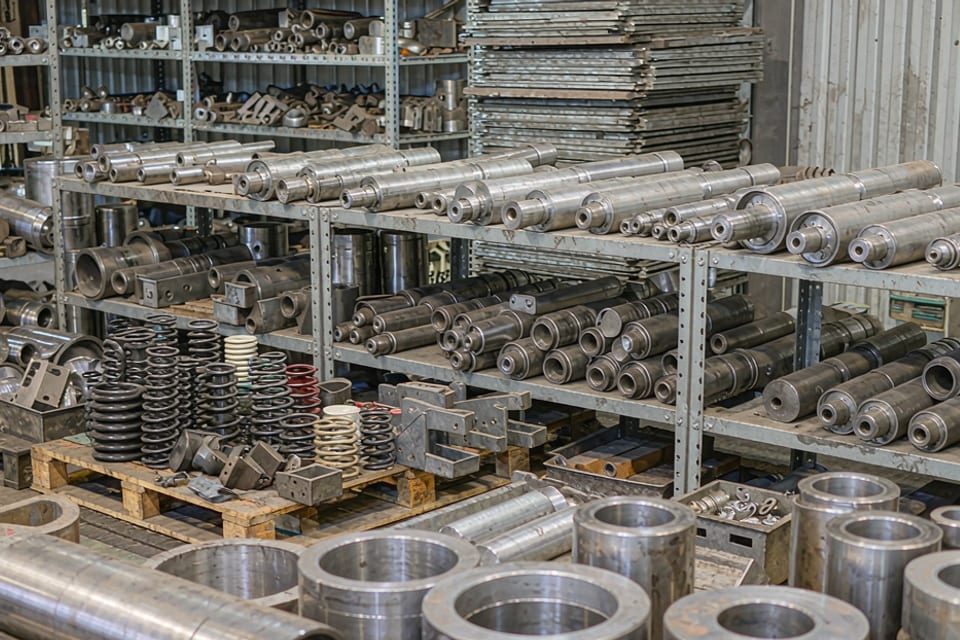
11 Item Lists and Material Recommendations
| Item / Part | Recommended Grade | Specifications / Thickness | Surface | Main Failure Modes | Reference Standards |
|---|---|---|---|---|---|
| Flanges (Welded/Butted/Nonspec) | 304/304L/316/316L/321/2205 | DN15–DN600;PN10–PN100 | 2B/Die-Smooth/Acid-Strip | Leakage at Sealing Surface + Intergranular Corrosion in Weld Heat-Affected Zone + Chloride Stress Corrosion Cracking | GB/T 9115/9119;NB/T 47010 |
| Pipe Fittings (Elbows/Tees/Diaphragms/Cardinals) | 304L/316L/321/310S | DN15–DN1200 | Acid Strip/2B | Erosion-Under-Filming+Welding Intergranular Corrosion+High-Temperature Oxidation | GB/T 12459;GB/T 12771;GB/T 19228.1 |
| Fasteners (Nuts/Bolts/Nails/Screws) | 302/303/304/305/316/A2-70/A4-70 | M3–M64 | Brighten/Original Color/Layer Coating | Chloride Stress Corrosion Cracking+Fretting Corrosion+Hydrogen Embrittlement+Fatigue | GB/T 3098.6;ISO 3506 |
| Springs (Disc Springs/Wave Springs/Precision Small Springs) | 301/304/316/17-7PH | Sheet 0.05–3.0mm | Lustrous/2B | Stress Relaxation+Fatigue Fracture+Corrosion | GB/T 1972;GB/T 24588 |
| Bearings (Roller Bearings/Rollers/Sleeves) | 440C/304Keep Guard | Circle 1-20mm | Quenched + Polished | Contact Fatigue + Corrosion Pitting | GB/T 308.1;GB/T 1220 |
| Filter Materials (Woven Fabric/Braided Net/Sintered Mesh/Filters) | 304/316/316L/904L | 20-500 Mesh; Wire Diameter 0.025-0.5mm | Lustrous / Acid Etching / Electrolytic | Blockage + Wear + Cl⁻ Corrosion | GB/T 17492;GB/T 3280 |
| Heat Exchangers (Tube Shell/Plate/Wing Type) | 304/316L/2205/2507 | Tube φ10-50mm; Plate 0.4-1.0mm | Etching / Brightening / Rolling | Cl⁻ Pitting Hole + Crevice Corrosion + Tube Bundle Fatigue | GB/T 151;NB/T 47004 |
| Storage Tanks/Reactors/Batch Mixers | 304L/316L/904L/2205 | 3–30mm | 2B / Acid Etching / Electroplating | Medium Corrosion + Welding Intergranular Corrosion + Mixing Fatigue | NB/T 47003.1;GB/T 3280 |
| Conveyor Belts / Net Chains / Chain Plates | 304/316/310S/314 | Diameter 1-3mm, Link Plate 0.8-2.0mm | 2B/OpenHole, Polished/OpenHole | Creep + Wear + Thermal Fatigue | GB/T 17492;GB/T 3280 |
| Rollers (conveying/offset/printing/furnace/pillow) | 304/316L/2205/310S | 3-30mm Roll | Mirror/Die-silk/Grooved surface | Wear, Corrosion, High-temperature Oxidation, Thermal Fatigue | according to equipment standard |
| Cutting Tools/Saw Blades (Food/Medical/Lumber/Paper) | 420/440A/440C/9Cr18 | 1–12mm | Quenched and Polished | Wear on Edge/Breakdown/Corrosion Fatigue | GB/T 1220;YY/T 0149 |
Inside TableBasic ConfigurationSpecify usage conditions, it's easier to specify than the grade.
Material Selection Tips
- Most common grades in this industry are 304 (8), 316L (6), 316 (5) —— numbers in parentheses indicate the number of parts involved, useful for quoting and material ordering.
- Consider hardness for wear parts (edges, liners, conveyors) beyond just corrosion resistance (hit 5/11).
- Commonly corrosive sources are chloride ions and salts (pitting, crevice corrosion) (hit 4/11).
- Thickness range: 0.025–500 mm: thin plates for forming parts (consider bend back and deep drawing cracking), thick plates for welded structures (consider heat input and sensitization).
Common Issues
Which stainless steel is most used in the general spare parts pool (cross-industry high-frequency finished products)?
Out of 11 components, 304 (8 hits), 316L (6 hits), and 316 (5 hits) appear most frequently. Specific to a part still depends on the medium and temperature; for example, stainless steel countertops that come into contact with salt water should switch from 304 to 316L.
Which parts are prone to issues?
Based on failure descriptions, typical is "flanges (butt weld/flat weld/non-standard)": leak at seal face + HAZ intergranular corrosion + Cl⁻ pitting; recommended grades 304/304L/316/316L/321/2205, sizes DN15–DN600; pressures PN10–PN100. For these conditions, it's recommended to specify medium concentration, temperature, and cleaning method in the design phase.
What thickness is generally needed?
The listed thickness range is 0.025–500 mm. Thin plates consider forming and surface properties, thick plates for welding strength; different manufacturers may choose differently based on your drawings or conditions, review accordingly.
Related Materials and Adjacent Industries
2205Material and Specifications304Material and Specifications304LMaterial and Specifications316LMaterial and Specifications321Material and SpecificationsBuildings and InfrastructureConstruction & InfrastructurePower and Heat Production and Supply (including FGD Desulfurization)Power & Energy (incl. FGD)Gas Production and Supply IndustryGas Supply
Applications11